Proven Impact. Real Outcomes.
Detailed explorations of how DashMindsIQ solves complex technical and operational challenges for enterprise clients across industries.


How a Staffing Company Could Modernise Recruitment Operations With Custom ATS Development
Imagine TalentBridge Workforce, a hypothetical staffing and recruitment company serving multiple enterprise clients across technology, healthcare, finance, and professional services. The company manages a large candidate database, hundreds of active job requisitions, recruiter teams, interviews, candidate communications, client submissions, onboarding activities, and placement workflows. As the business expanded, its recruitment processes became increasingly difficult to manage through a standard Applicant Tracking System (ATS). Different clients required different submission processes, recruiters used varying workflows, and important candidate information was spread across the ATS, CRM, email, spreadsheets, job boards, and HR systems. TalentBridge wanted a recruitment platform that could reflect its operating model rather than requiring recruiters to work around the limitations of a generic system.
How a Growing Enterprise Could Modernise Application Operations With Kubernetes Enterprise Deployment
Imagine NorthBridge Digital, a hypothetical growing enterprise operating customer-facing web applications, internal platforms, APIs, and data services across cloud and hybrid infrastructure. As its application portfolio expanded, different development teams adopted containers to package and deploy workloads. However, container adoption happened incrementally, resulting in different deployment processes, configuration practices, monitoring tools, and infrastructure environments. Operations teams increasingly struggled to maintain consistency across applications while supporting new releases, changing workloads, and multiple environments. NorthBridge wanted a more structured way to manage its growing containerised application environment without treating every workload as a separate infrastructure project.
How an Enterprise Could Improve Knowledge Discovery With Vector Database Enterprise Search
Imagine NexaCore Systems, a hypothetical global technology enterprise supporting thousands of employees across engineering, operations, sales, finance, HR, and customer support. Over time, NexaCore accumulated a large volume of internal knowledge across SharePoint repositories, cloud storage, wikis, ticketing systems, engineering documentation, policy portals, CRM records, product manuals, and internal knowledge bases. Employees could search these systems individually, but finding the right information often required knowing the exact terminology used in the original document. A support engineer searching for guidance about a product issue, for example, might use different words from those contained in the relevant technical documentation. The enterprise wanted to improve knowledge discovery without creating another disconnected information repository.
How a Logistics Company Could Improve Fleet Planning With Route Optimisation Software
A hypothetical logistics provider, TransitFlow Logistics, manages a mixed fleet serving retail stores, commercial customers, and direct-to-consumer deliveries across several operating regions. Its daily planning process involves multiple vehicles, hundreds of delivery locations, customer time windows, different vehicle capacities, driver schedules, and changing traffic conditions. As the operation grew, dispatchers found it increasingly difficult to create efficient routes manually.

How a Financial Services Company Could Strengthen Transaction Monitoring With AI Fraud Detection
A hypothetical regional financial services company, FinServe Group, processes a large volume of digital transactions across online banking, mobile payments, cards, and account transfers. As its digital customer base expanded, the organisation found that its existing fraud monitoring approach was becoming increasingly difficult to manage. The company needed a way to identify suspicious activity more effectively while helping its fraud analysts focus their time on higher-priority cases.
How a Startup Could Build a Scalable SaaS Product With the Right Development Partner
Building a SaaS product requires more than writing application code. Startups must validate their product concept, define technical requirements, plan for scalability, integrate external services, and establish security from the beginning. This hypothetical case study explores how a startup could work with a SaaS product development company to move from an early product concept to a production-ready and scalable SaaS platform.
How a Growing Technology Company Could Choose IT Staff Augmentation Over Outsourcing
Technology companies often need specialized engineering talent without committing to permanent hiring for every project. When internal teams face skill gaps, tight deadlines, or changing requirements, businesses may consider IT staff augmentation. This hypothetical case study explores how a growing technology company could evaluate both models and choose specialized IT staff augmentation to expand its technical capabilities while maintaining direct project ownership.

How an Enterprise Could Build a Stronger Data Governance Strategy for Trusted Business Data
Trusted data is essential for effective analytics, reporting, compliance, and artificial intelligence initiatives. However, large enterprises often manage information across multiple departments, applications, databases, and cloud platforms, making consistent governance difficult. This hypothetical case study explores how an enterprise could establish a stronger data governance strategy to improve data trust, accountability, security, and readiness for advanced analytics and AI.

How a Manufacturer Could Use Digital Twin Technology to Improve Production Visibility
Manufacturers increasingly need real-time visibility into equipment, production processes, and operational performance to make faster decisions. Traditional monitoring can show what is happening, but it may provide limited insight into why issues occur or what could happen after an operational change. This hypothetical case study explores how a manufacturer could use digital twin manufacturing to create better production visibility and support more informed decision-making.

How a SaaS Company Could Strengthen Its Security and SOC 2 Compliance Readiness
For growing SaaS businesses, strong security controls are essential for protecting customer data and building enterprise trust. However, as technology environments become more complex, maintaining consistent controls and preparing for compliance assessments can become difficult. This hypothetical case study illustrates how a SaaS company could use a structured, technology-driven approach to improve its SOC 2 compliance SaaS readiness.
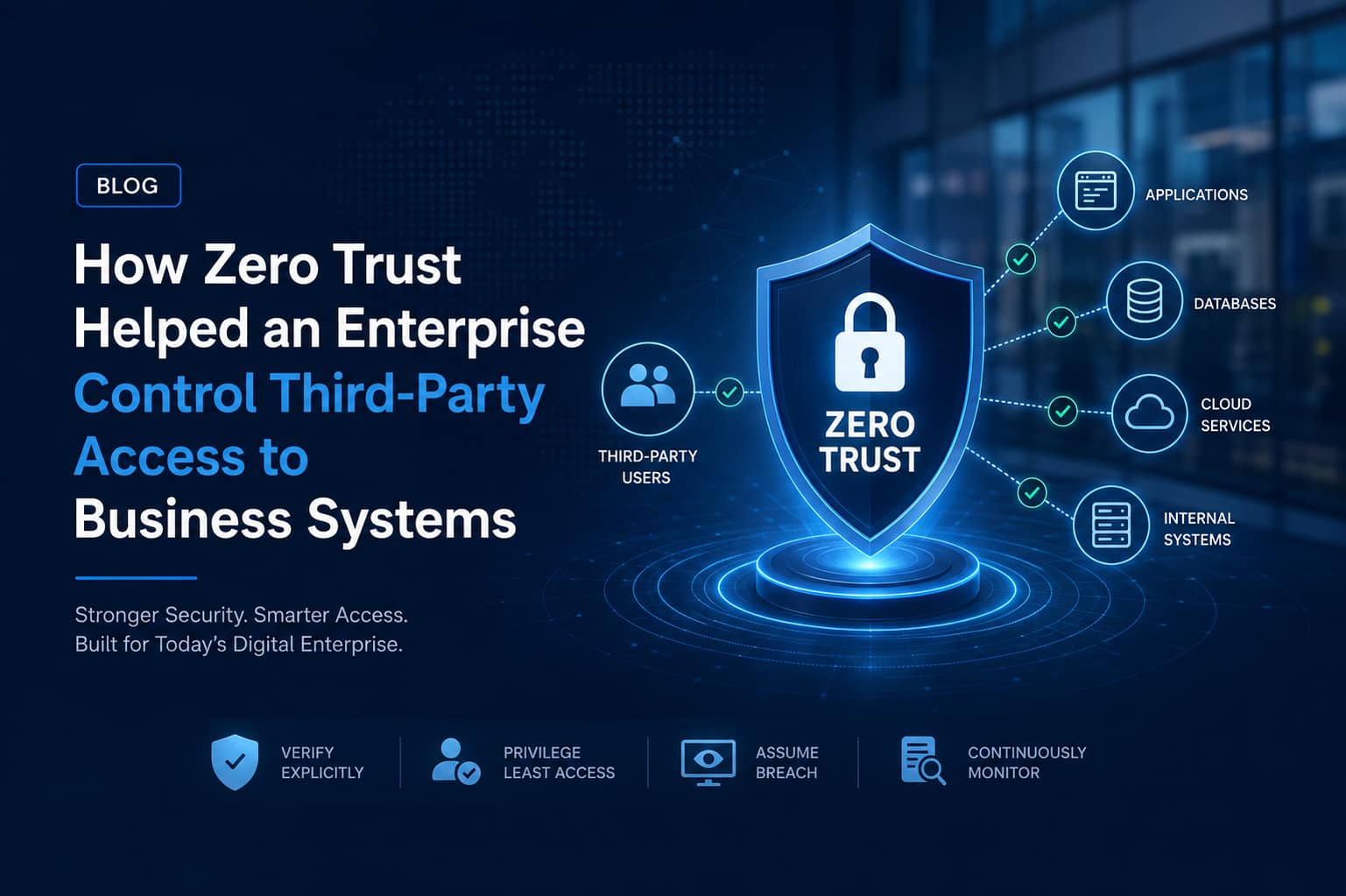
How Zero Trust Helped an Enterprise Control Third-Party Access to Business Systems
A large enterprise was operating a highly distributed IT environment that included cloud applications, SaaS platforms, legacy applications, remote employees, mobile devices, and multiple third-party service providers. External vendors and contractors needed access to selected business systems to perform activities such as application support, infrastructure maintenance, implementation work, and specialized services. However, managing this access had become increasingly difficult. The organization relied heavily on a perimeter-oriented security model. Once users gained access through approved network paths, controls over what they could access within the environment were not always consistent. The enterprise also faced fragmented identity systems, excessive permissions, inconsistent endpoint visibility, and different access processes across applications.
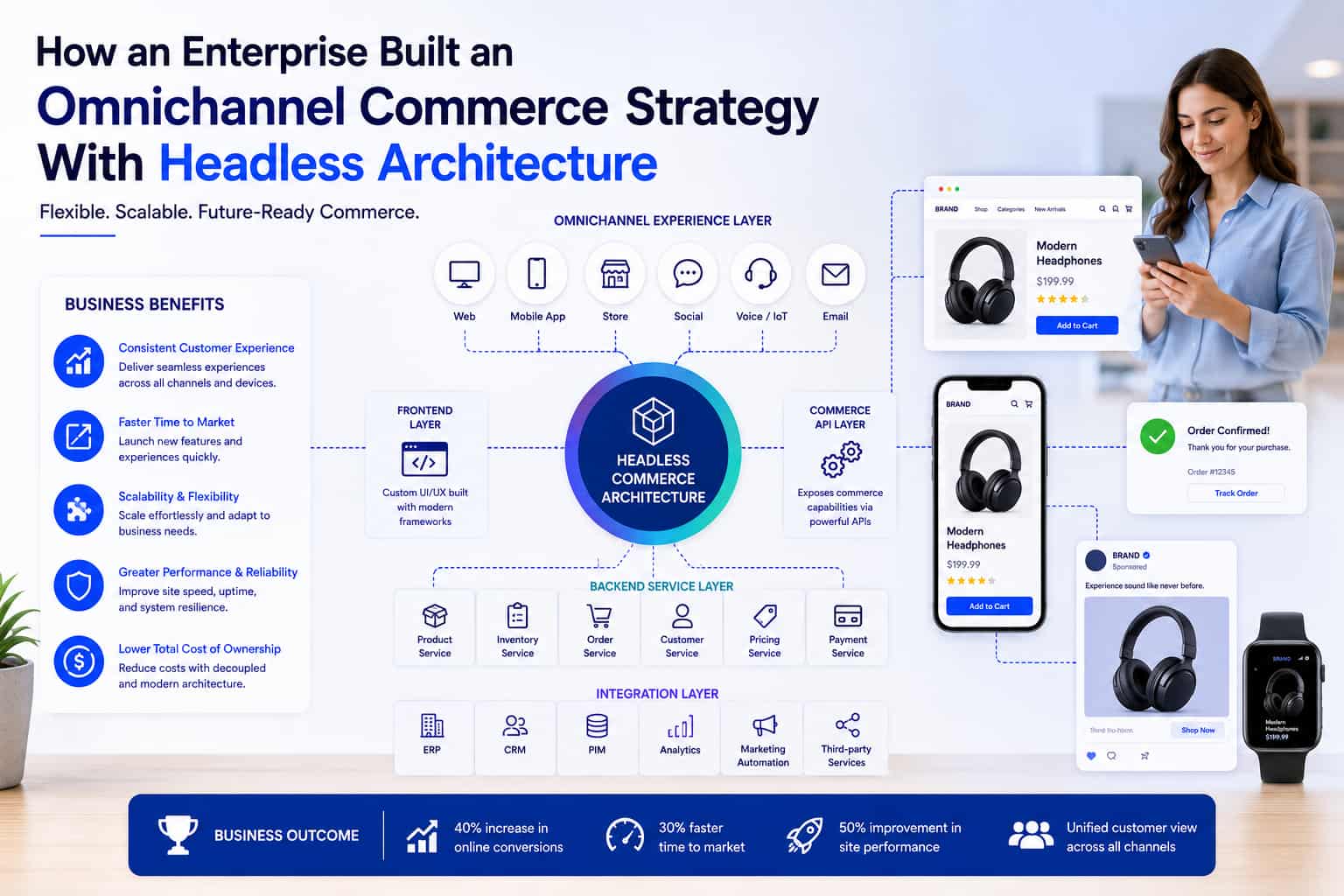
How an Enterprise Built an Omnichannel Commerce Strategy With Headless Architecture
A growing enterprise ecommerce business had expanded beyond a traditional online storefront. Its digital ecosystem included a primary website, mobile experience, B2B portal, regional storefronts, personalized content, and several third-party services. However, the company's tightly coupled ecommerce platform was becoming a constraint. Frontend teams often depended on backend development teams to make experience changes. Updates that appeared simple from a customer perspective could require changes across multiple connected systems. Different digital channels also had different requirements, making it difficult to maintain a consistent experience.
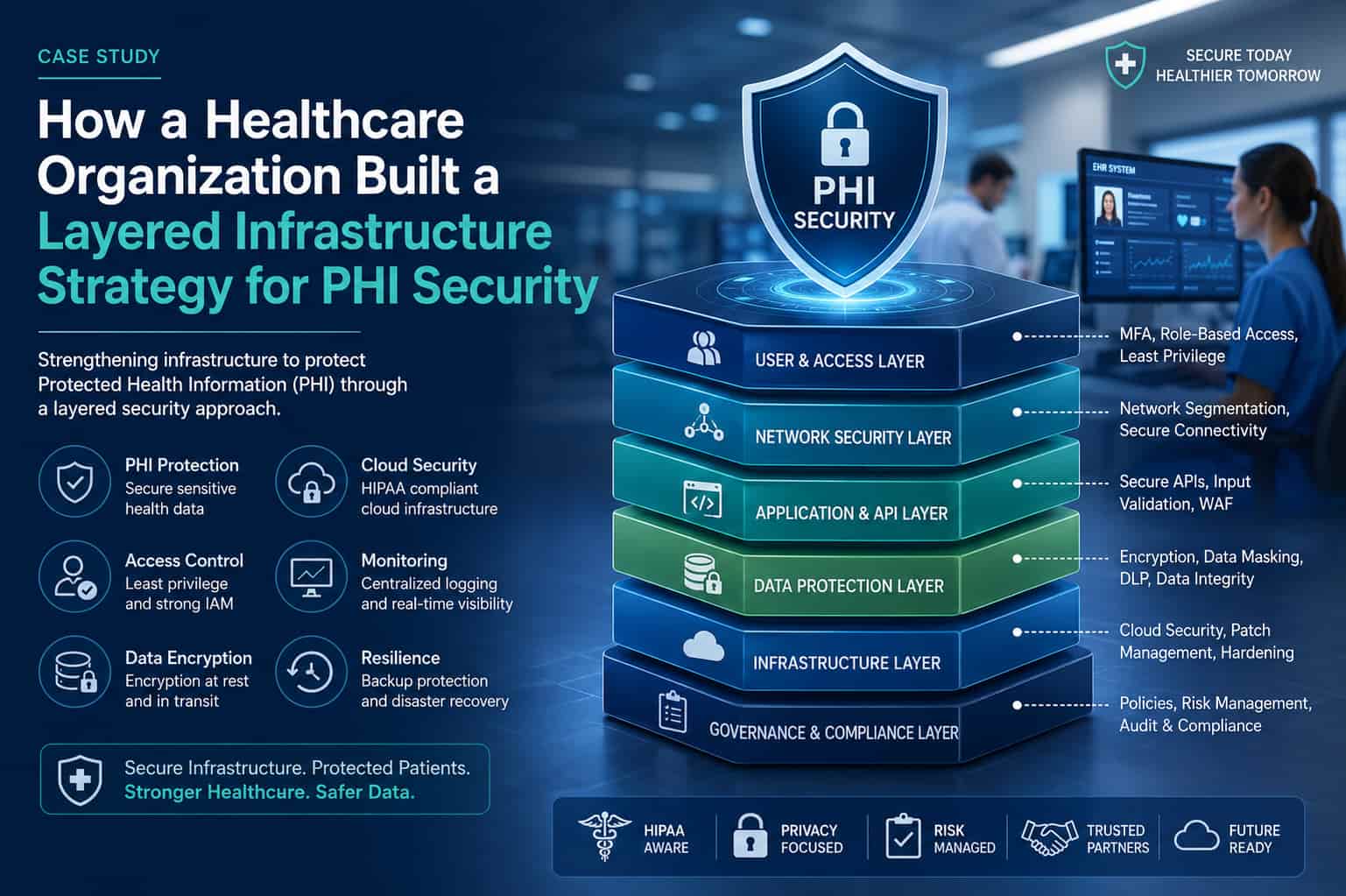
How a Healthcare Organization Built a Layered Infrastructure Strategy for PHI Security
Healthcare organizations increasingly depend on connected applications, cloud platforms, APIs, databases, remote access, and third-party services to deliver and manage healthcare operations. As these environments grow, protecting Protected Health Information (PHI) requires more than securing an individual application or deploying a single security product.
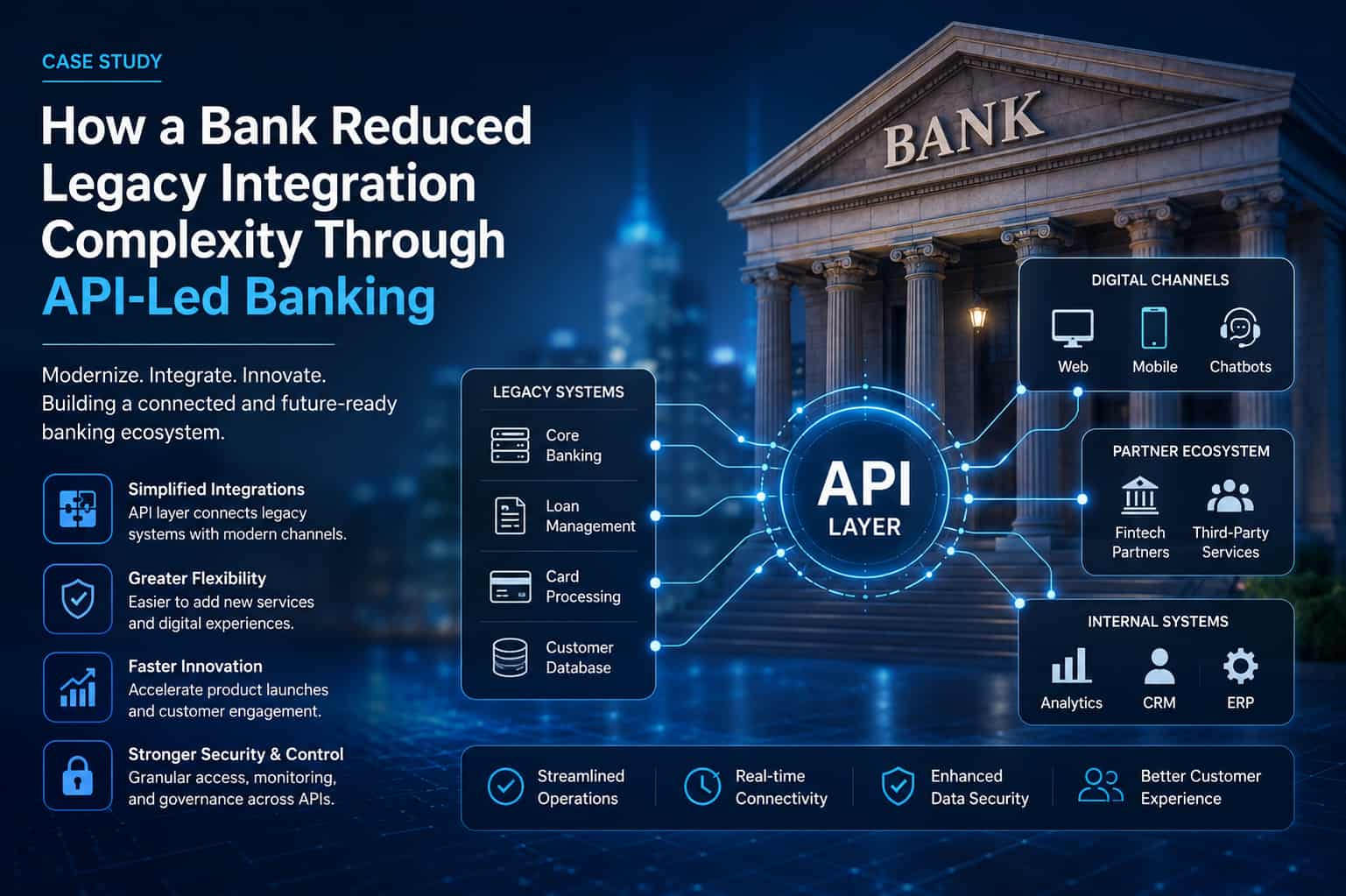
How a Bank Reduced Legacy Integration Complexity Through API-Led Banking
A growing financial institution was operating on a collection of legacy banking systems that had evolved over many years. While these systems continued to support critical banking functions, their architecture was making it increasingly difficult for the bank to introduce new digital services and integrate modern applications. The bank's technology teams were dealing with fragmented customer data, limited API capabilities, batch-oriented processes, and tightly coupled legacy dependencies. Connecting a new digital banking application to core systems often required custom interfaces and coordination across multiple technology teams.
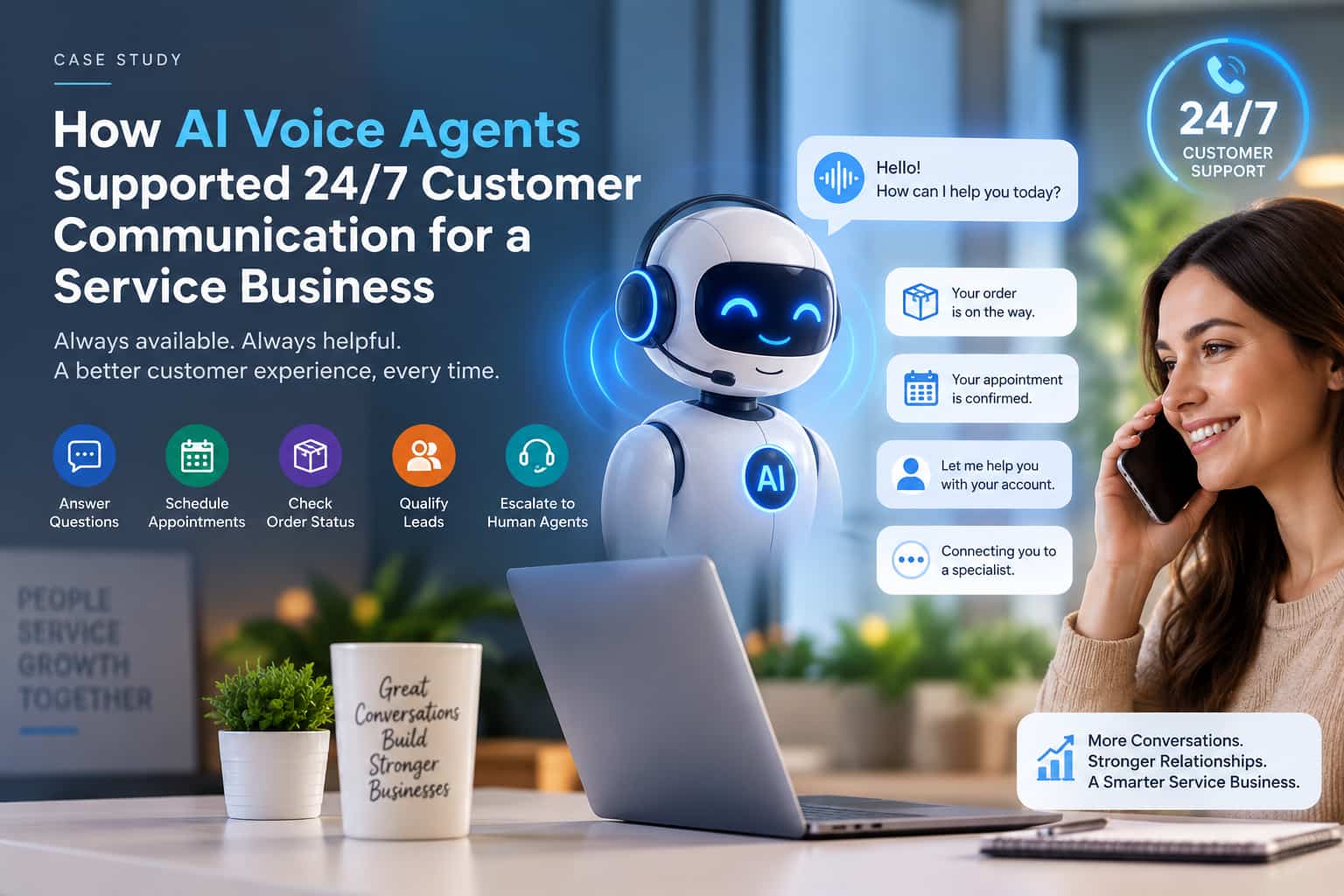
How AI Voice Agents Supported 24/7 Customer Communication for a Service Business
For service businesses, customer communication does not always fit within standard working hours. Customers may need appointment information, order updates, account assistance, or answers to routine questions outside the hours when human support teams are available. A growing service business faced this challenge as call volumes increased. Its customer service team was spending substantial time handling repetitive conversations, while customers experienced delays during busy periods and had limited support after hours.
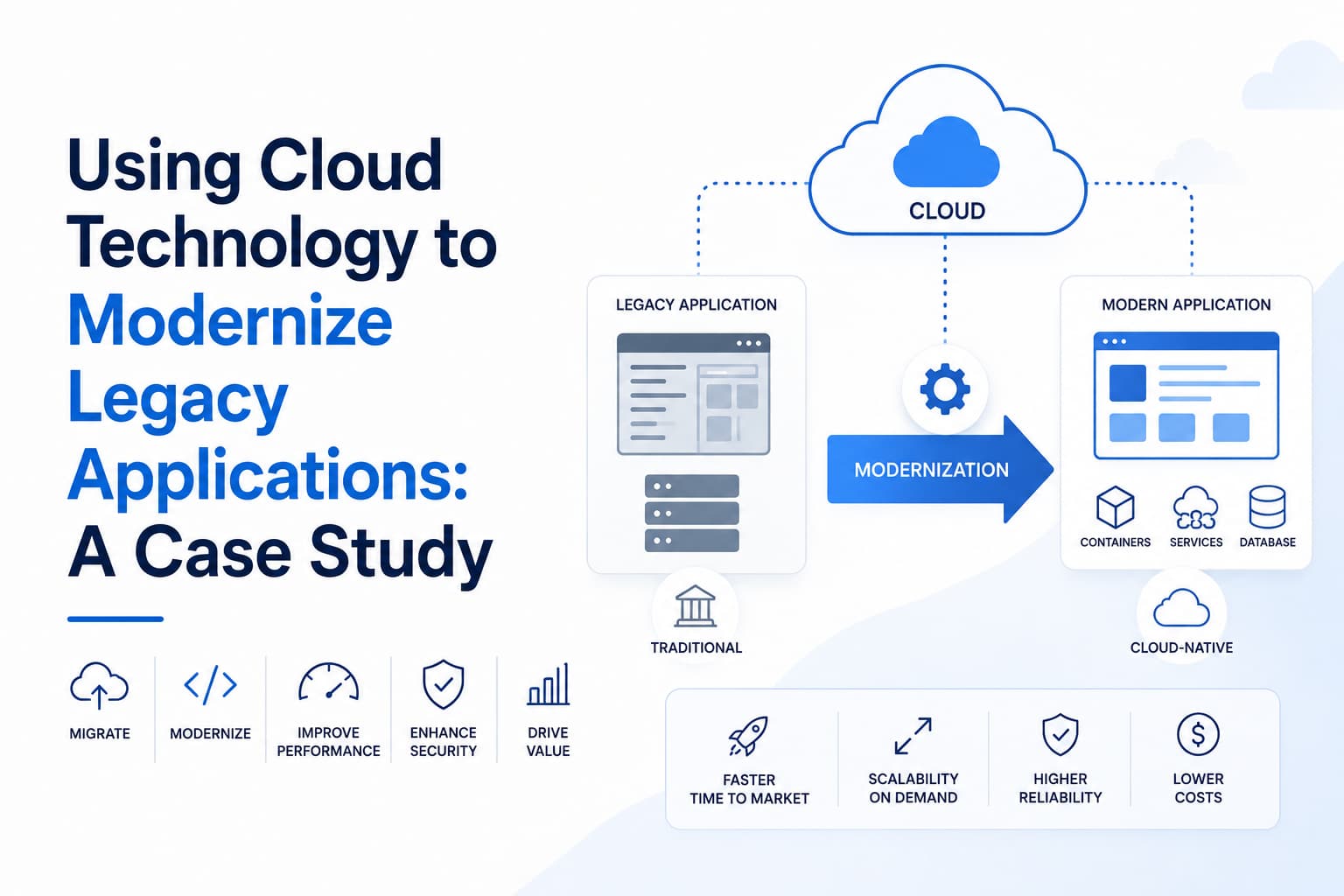
Using Cloud Technology to Modernize Legacy Applications: A Case Study
Many enterprises rely on legacy applications that remain important to daily operations but are increasingly difficult to maintain, integrate, and scale. Older architectures can limit the organization's ability to introduce new capabilities or respond quickly to changing business requirements.
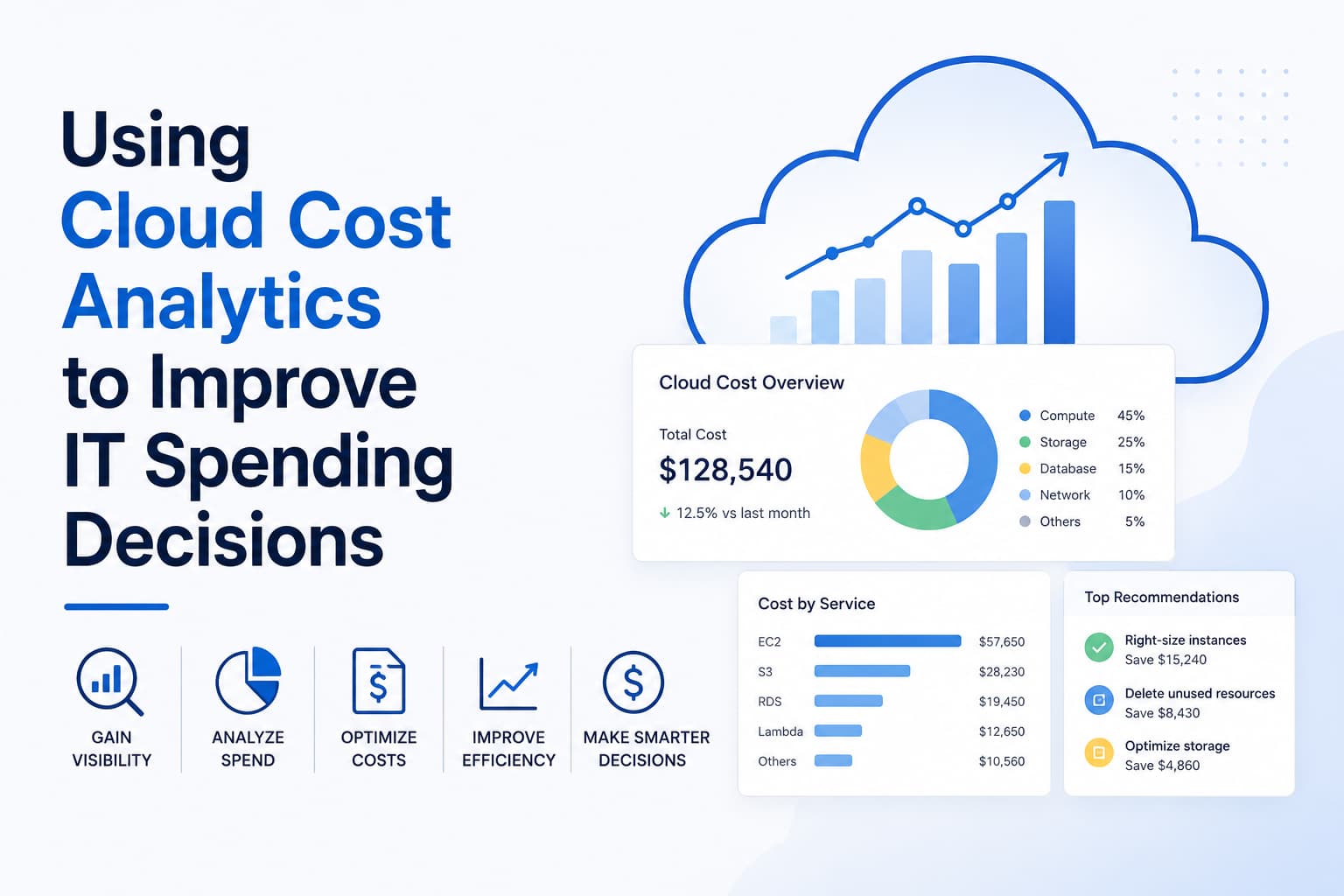
Using Cloud Cost Analytics to Improve IT Spending Decisions
Cloud adoption has become essential for modern enterprises supporting applications, data platforms, analytics, and digital services. However, as cloud environments grow, controlling expenditure can become increasingly challenging.
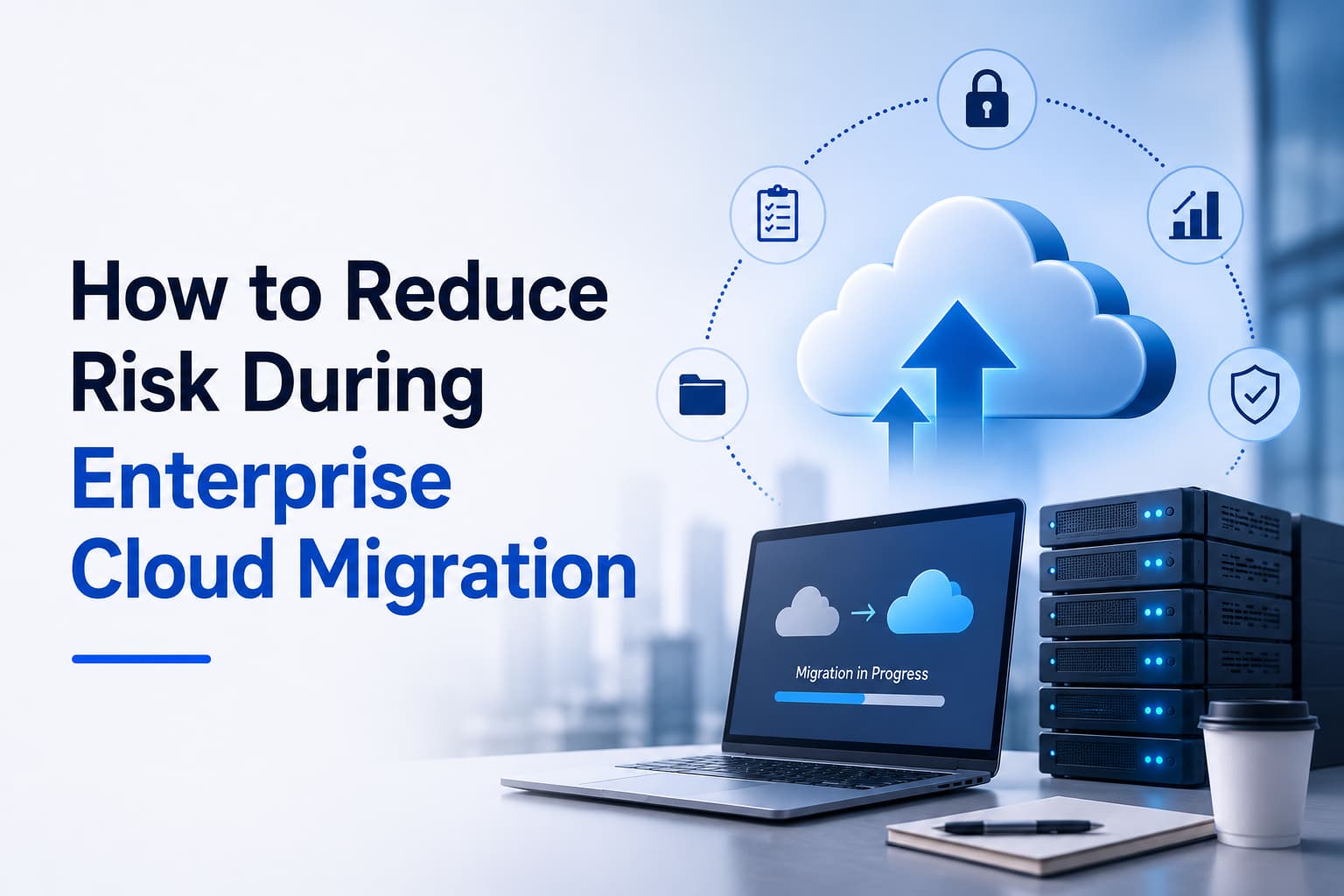
How to Reduce Risk During Enterprise Cloud Migration
Enterprise cloud migration can improve scalability, flexibility, and operational efficiency. However, moving applications, data, and workloads from existing environments to the cloud can also introduce technical and business risks.
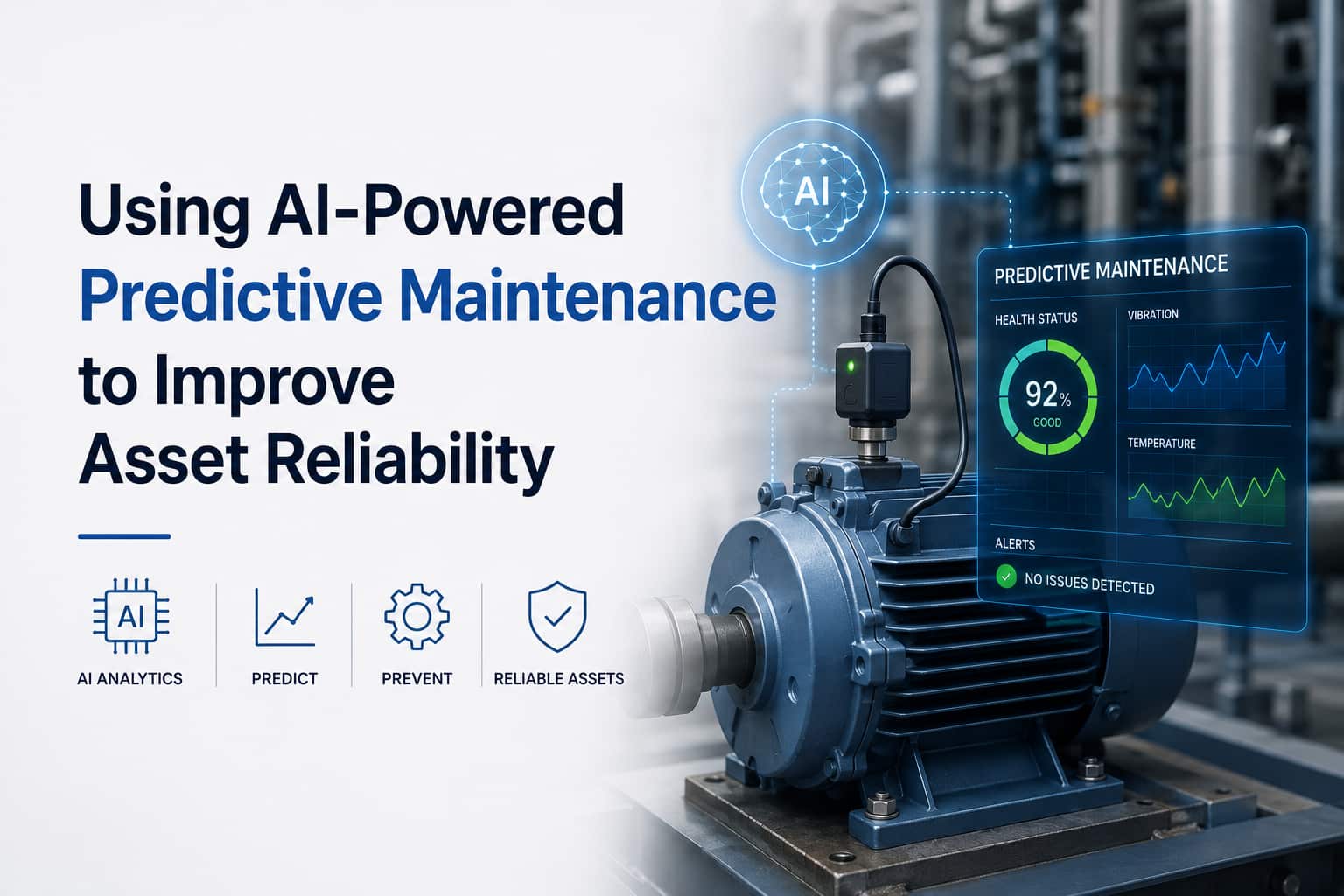
Using AI-Powered Predictive Maintenance to Improve Asset Reliability
Equipment reliability is critical for businesses that depend on machinery, industrial assets, and connected infrastructure. Unexpected failures can disrupt operations, increase maintenance pressure, and make resource planning difficult.

How Computer Vision Can Detect Production Defects in Real Time
Manufacturers operating high-volume production lines need consistent quality inspection without slowing production. Manual inspection can become difficult when products move quickly, defects are subtle, or inspection requirements change frequently. This representative case study explores how computer vision manufacturing technology can help improve real-time defect detection and create a more consistent quality inspection process.
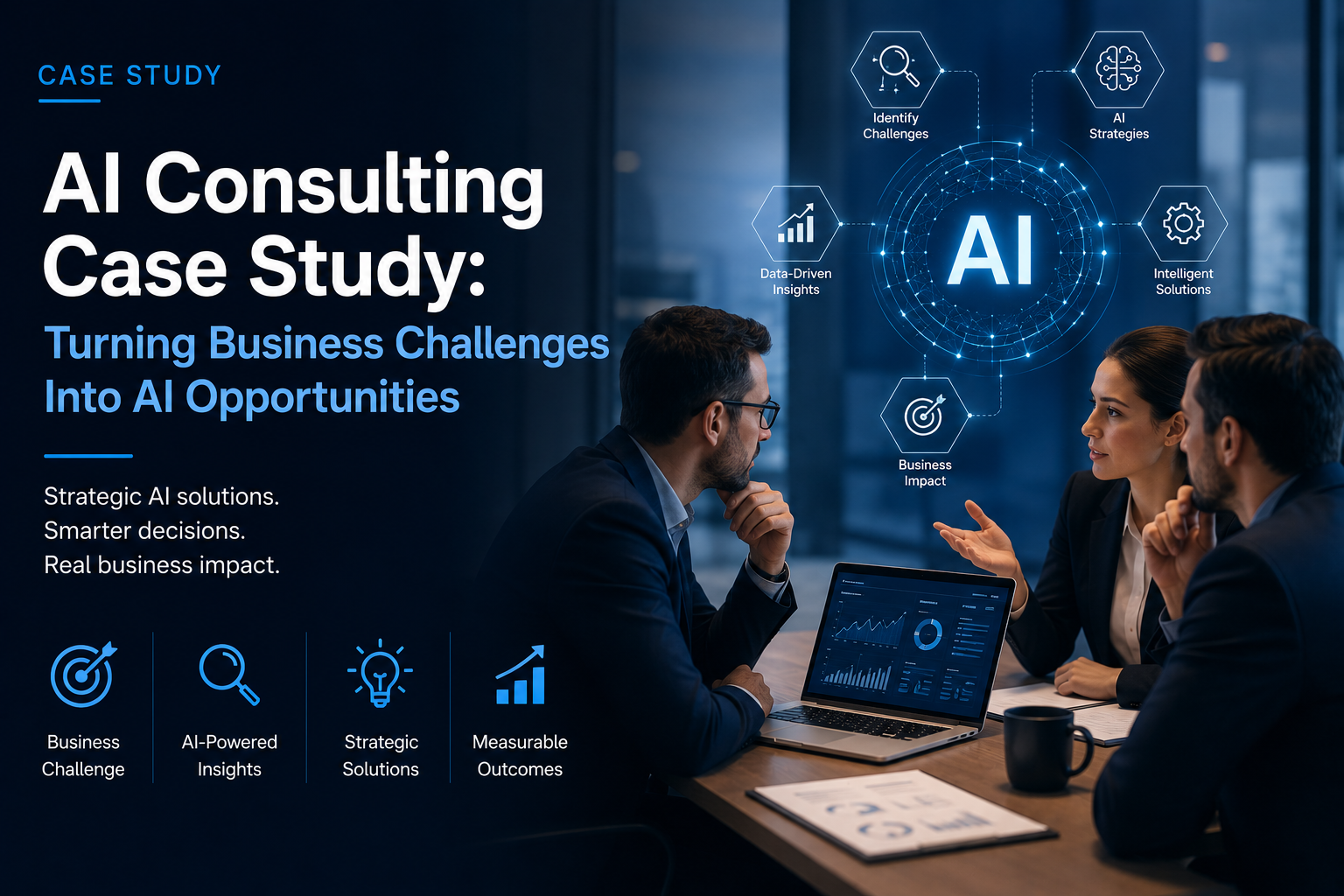
Turning Business Challenges Into AI Opportunities
A growing business is managing increasing volumes of customer requests, internal data, documents, and repetitive operational tasks. Employees rely heavily on manual processes to search for information, respond to common customer questions, prepare reports, and move data between systems. Traditional approaches may help the business manage its current workload, but they can become difficult to scale as demand increases. Adding more manual steps or employees may also increase operational complexity without addressing the underlying process inefficiencies. The organization wants to explore artificial intelligence but needs clarity on where AI can create genuine business value, which technologies are appropriate, and how AI can be introduced without disrupting existing operations. This representative scenario demonstrates how AI Consulting from DashMindsIQ could help address such challenges. Note: This is a hypothetical business scenario based on common industry challenges. It does not represent an actual DashMindsIQ client engagement, verified result, testimonial, or completed project.
Software Development Agency Case Study | DashMindsIQ
A growing business is expanding its customer base and operations but relies on a combination of spreadsheets, legacy software, manual workflows, and disconnected third-party tools. As transaction volumes increase, employees spend more time moving information between systems, while customers experience delays and inconsistent digital interactions. The business needs a reliable software platform that can centralize key processes, improve productivity, support customer-facing services, and scale as the company grows. However, it lacks the internal development expertise to plan and execute the project efficiently. This is where partnering with a Software Development Agency such as DashMindsIQ can provide a structured path from business requirements to a scalable software solution. Note: This is a representative business scenario based on common industry challenges. It does not describe an actual DashMindsIQ client project or claim specific results.
IT Consulting Services for Business Growth
A growing business has expanded its operations, employees, customers, and digital systems. However, its IT environment has evolved without a unified long-term strategy. Different teams rely on separate applications, legacy systems, manual processes, and disconnected data sources. As the business grows, these technology gaps begin affecting productivity, operational efficiency, scalability, and customer experience. Management understands that technology needs to become a stronger business enabler but lacks the internal expertise to determine what should be modernized, integrated, replaced, or retained. This is where IT Consulting Services from DashMindsIQ can help businesses align technology decisions with their broader business objectives. Note: This is a representative business scenario based on common industry challenges. It does not describe an actual DashMindsIQ client project or claim specific results.
Artificial Intelligence Consultancy for Smarter Business Operations
A growing enterprise is handling a rising volume of customer interactions, repetitive internal processes, and business data across multiple systems. While the company has already adopted several digital tools, employees still spend significant time on manual tasks such as information retrieval, document processing, customer queries, reporting, and workflow management. The business recognizes that artificial intelligence could improve these processes but is unsure where to begin, which AI technologies are appropriate, and how to integrate them without disrupting existing operations. This is where Artificial Intelligence Consultancy from DashMindsIQ can help businesses identify practical AI opportunities and build a structured path toward adoption. Note: This is a representative business scenario based on common enterprise challenges. It does not describe an actual DashMindsIQ client project or claim specific results.
Using Mobile Application Development Services to Improve Customer Engagement
A growing service-based business is experiencing a common digital challenge: its customers increasingly expect faster, more convenient, and mobile-first interactions, while many of its existing processes still depend on a website, phone calls, emails, and manual follow-ups.

Headless Commerce & AI Recommendations for a Multi-Brand Retailer
Our client operates five distinct apparel brands, each acquired or launched over the past decade and each running on a different e-commerce platform two on Shopify Plus, one on Magento, one on a custom-built legacy system, and one on a platform that was being sunset by its vendor entirely.
Core Banking Modernisation for a Regional Commercial Bank
Our client is a regional commercial bank serving over 400,000 retail and SME customers across Southeast Asia. Founded over six decades ago, the bank had built a strong regional reputation but its core banking platform was a heavily customised mainframe system implemented in the early 1990s, maintained by a shrinking pool of specialists familiar with its codebase.
Mobile App Development Case Study | DashMindsIQ
A growing service-based business is experiencing a common digital challenge: its customers increasingly expect faster, more convenient, and mobile-first interactions, while many of its existing processes still depend on a website, phone calls, emails, and manual follow-ups. The business wants to introduce a dedicated mobile application that gives customers a simpler way to access services, submit requests, receive updates, and communicate with the company. At the same time, its internal team needs a centralized system to manage customer activity and reduce dependency on disconnected processes. To address these requirements, the company considers partnering with DashMindsIQ for Mobile Application Development Services. Important: This is a hypothetical business scenario created to demonstrate how DashMindsIQ's mobile application development approach could be applied. It does not represent an actual client project or guaranteed business results.
Have a Similar Technical Challenge?
Our practice leads are happy to walk you through our approach, architecture, and timeline estimates.