1. Introduction
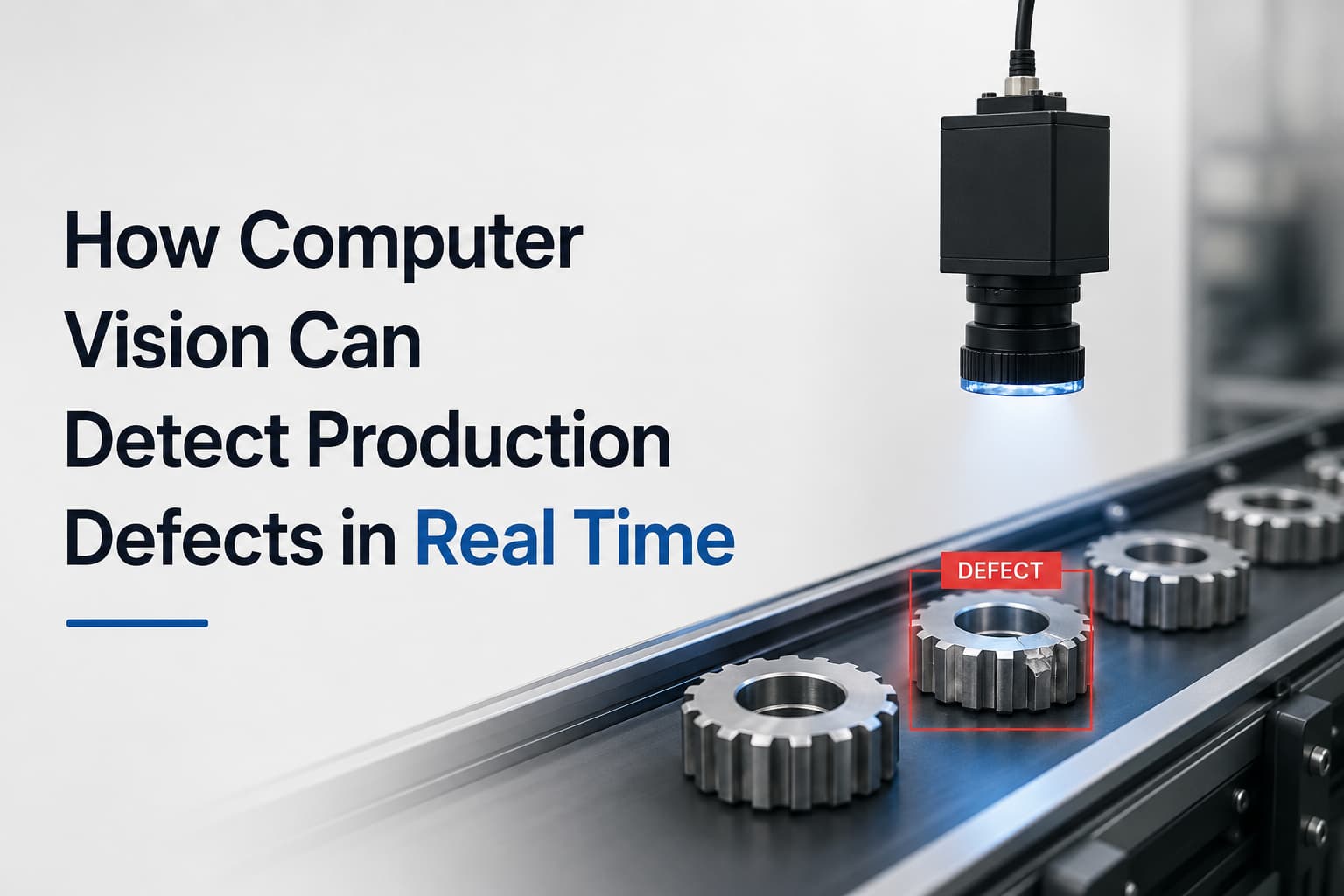
Manufacturers operating high-volume production lines need consistent quality inspection without slowing production. Manual inspection can become difficult when products move quickly, defects are subtle, or inspection requirements change frequently. This representative case study explores how computer vision manufacturing technology can help improve real-time defect detection and create a more consistent quality inspection process.
2. Business Challenge
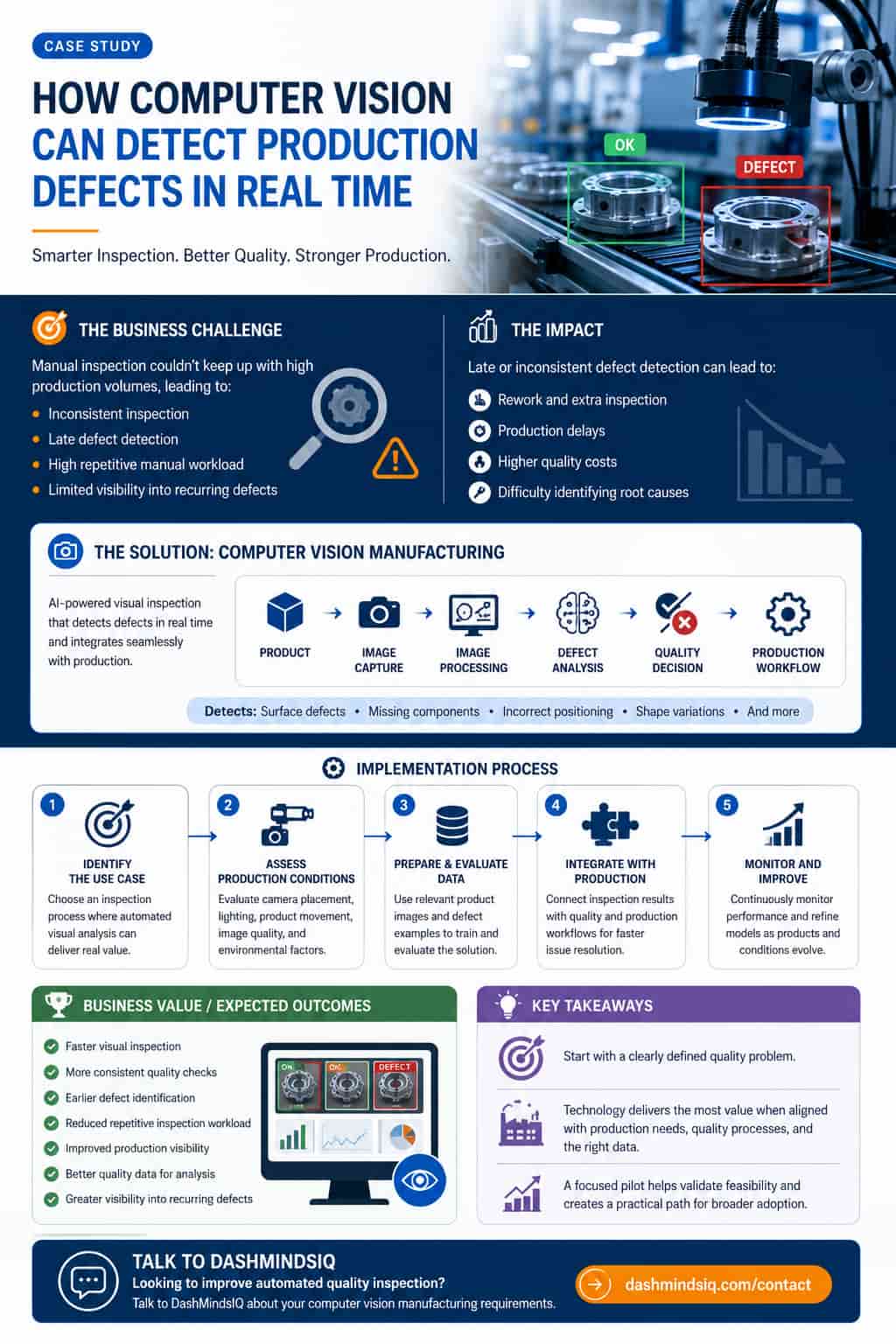
The organization relied heavily on manual inspection to identify defects during production. As production volumes increased, maintaining inspection speed and consistency became challenging.
The business needed to:
- Detect defects closer to the point of production
- Improve inspection consistency
- Reduce repetitive manual checks
- Identify quality issues earlier
- Gain better visibility into recurring defects
The objective was not simply to automate inspection but to develop a solution that could work within the existing production environment.
3. Impact of the Problem
When defects are identified late, manufacturers may need to inspect additional products, rework affected items, or investigate entire production batches. Inconsistent inspection can also make recurring quality issues harder to identify. Improving the speed and consistency of quality inspection was therefore an important operational priority.
4. DashMindsIQ's Approach
DashMindsIQ focused first on the organization's business and inspection requirements. The approach considered:
- Types of defects that need to be detected
- Where inspection should occur
- Product characteristics to evaluate
- Production-line movement
- Lighting and image conditions
- How inspection results should be handled`
This assessment helps determine whether computer vision is suitable for the specific manufacturing use case.
5. Technology / Solution Implemented
The proposed computer vision manufacturing solution uses cameras and image analysis to capture product information during production. AI-based image analysis can then evaluate visual characteristics and identify potential defects based on defined inspection requirements.
A typical workflow includes:
Product → Image Capture → Image Processing → Defect Analysis → Quality Decision → Production Workflow
Potential inspection areas include surface defects, missing components, incorrect positioning, shape variations, and other visually identifiable quality issues. Inspection data can also be captured for further analysis, helping teams identify recurring quality patterns.
6. Implementation Process
Step 1: Identify the Use Case
Select an inspection process where automated visual analysis can provide meaningful operational value.
Step 2: Assess Production Conditions
Evaluate camera placement, lighting, product movement, image quality, and environmental factors that may affect inspection accuracy.
Step 3: Prepare and Evaluate Data
Relevant product images and defect examples can be used to develop, train, and evaluate the computer vision approach.
Step 4: Integrate With Production
Connect inspection results with relevant quality and production workflows so detected issues can be investigated and addressed.
Step 5: Monitor and Improve
Continuously evaluate performance. As products, defect types, or production conditions change, models and inspection processes may require refinement.
7. Business Value / Expected Outcomes
A properly designed computer vision solution can potentially deliver:
- Faster visual inspection
- More consistent quality checks
- Earlier defect identification
- Reduced repetitive inspection workload
- Improved production visibility
- Better quality data for analysis
- Greater visibility into recurring defects
Actual results depend on the manufacturing environment, data quality, inspection requirements, and implementation approach.
8. Key Takeaways
Successful computer vision manufacturing initiatives should begin with a clearly defined quality problem. The technology creates the greatest value when connected to practical production requirements, supported by suitable image data, and integrated with existing quality processes. A focused pilot can help manufacturers evaluate feasibility, validate the inspection approach, and establish a practical path toward broader adoption.
9. Talk to DashMindsIQ
Manufacturers considering computer vision manufacturing solutions need more than cameras and AI models. They need an approach that connects technology with quality objectives, production workflows, data, and long-term scalability. DashMindsIQ can help businesses evaluate computer vision opportunities, define suitable use cases, and develop an implementation approach aligned with their operational requirements.